X
CLient Portal


For reasons you can probably understand, every bit of news about the inflation rate is reported in the context of the upcoming elections. But there are actually more important financial angles to be considered.
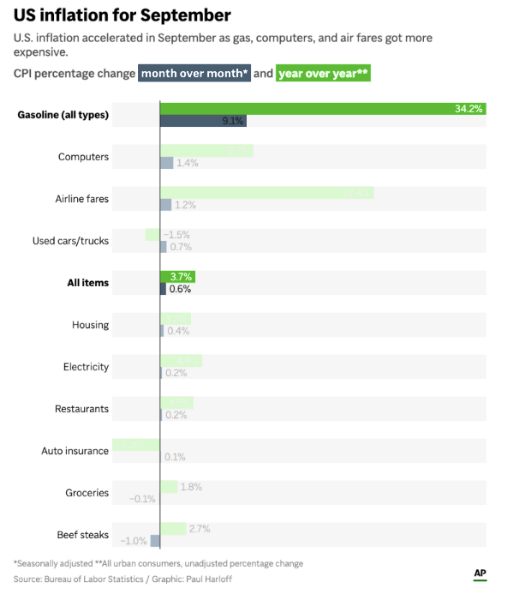
The headline rate—the traditional consumer price index—rose to an annualized 3.7% in September, up from 3.4% in August. That’s another way of saying that a basket of goods and services is 0.6% more expensive today than it was last month. If you leave out the exploding energy category (gas prices rose 9.1% in the past month) and food (which can be a volatile item, but apparently not this month), prices were still up 2.6%.
This can fairly be described as a mild surge in the inflation rate, and took many economists by surprise.
Rising prices, of course, affect personal finances across the board. Higher inflation also makes it more likely that the Federal Reserve Board will raise its short-term interest rate guidance in the next scheduled meeting at the end of October. That, in turn, tends to have a psychological effect on the quick-twitch traders who are constantly moving in and out of the market, who might pull the ‘sell’ trigger and give us short-term declines in the Dow and the S&P 500 indices.
The inflation rate also seems to have pushed up the yields that investors are demanding when they purchase bonds (their real returns, after all, are yields minus inflation), which raises the government borrowing costs on $40 trillion (and counting) government debt. Higher yields make bonds a bit more competitive with stocks for investors, which could also put some temporary pressure on stock prices.
And, of course, higher prices on goods and services might discourage consumers from buying, or put some items out of reach of their budget. Consumer purchases are the single largest item in economic growth statistics; fewer purchases, or less purchasing power, is one path to a recession.
A mild surge in inflation is no reason to panic, or even to worry. The point here is that inflation watchers ought to have more on their mind than whether a 0.6% movement in aggregate consumer prices will change the political mix in Congress. Inflation affects all of us everywhere, perhaps least of all politically.
Source:
Access our comprehensive, unbiased financial guides here.